

Electric Vehicle Charging Business
1. The Importance of Electric Vehicle Charging
- Environmental Friendliness
– Electric vehicles emit fewer pollutants than internal combustion engine vehicles that use fossil fuels.
– Using electric vehicles reduces air pollution and greenhouse gas emissions.
- Energy Efficiency
– Electric vehicles have higher energy conversion efficiency than internal combustion engine vehicles.
– This helps reduce energy consumption and lower operating costs.
- Energy Diversification
– Electric vehicle charging offers the potential to utilize renewable energy sources and promotes the diversification of energy sources.
– Electric vehicles emit fewer pollutants than internal combustion engine vehicles that use fossil fuels.
– Using electric vehicles reduces air pollution and greenhouse gas emissions.
– Electric vehicles have higher energy conversion efficiency than internal combustion engine vehicles.
– This helps reduce energy consumption and lower operating costs.
– Electric vehicle charging offers the potential to utilize renewable energy sources and promotes the diversification of energy sources.
2. Basic Elements of Electric Vehicle Charging
- Charging Infrastructure
Charging stations can be installed in various locations, such as public spaces, residential areas, office buildings, and shopping centers, and generally support both AC (alternating current) charging and DC (direct current) fast charging.
- Charging Cables and Connectors
Electric vehicles connect to charging stations using specific cables and connectors designed for their models; these may vary by country or vehicle manufacturer, and there are several major standardized types.
- Charging Methods
– AC Charging(Level 1 and Level 2) : Relatively slow charging using a standardhousehold or commercial power source.
Level 1 is the most basic charging method, using a standard 110–120V household power source, while Level 2 uses a 220–240V power source for slightly faster charging.
- DC Fast Charging(Level 3)
Primarily used at highway rest stops and large commercial facilities.
A fast-charging method that uses a powerful direct current to charge most batteries in a short amount of time.
Charging stations can be installed in various locations, such as public spaces, residential areas, office buildings, and shopping centers, and generally support both AC (alternating current) charging and DC (direct current) fast charging.
Electric vehicles connect to charging stations using specific cables and connectors designed for their models; these may vary by country or vehicle manufacturer, and there are several major standardized types.
– AC Charging(Level 1 and Level 2) : Relatively slow charging using a standardhousehold or commercial power source.
Level 1 is the most basic charging method, using a standard 110–120V household power source, while Level 2 uses a 220–240V power source for slightly faster charging.
Primarily used at highway rest stops and large commercial facilities.
A fast-charging method that uses a powerful direct current to charge most batteries in a short amount of time.
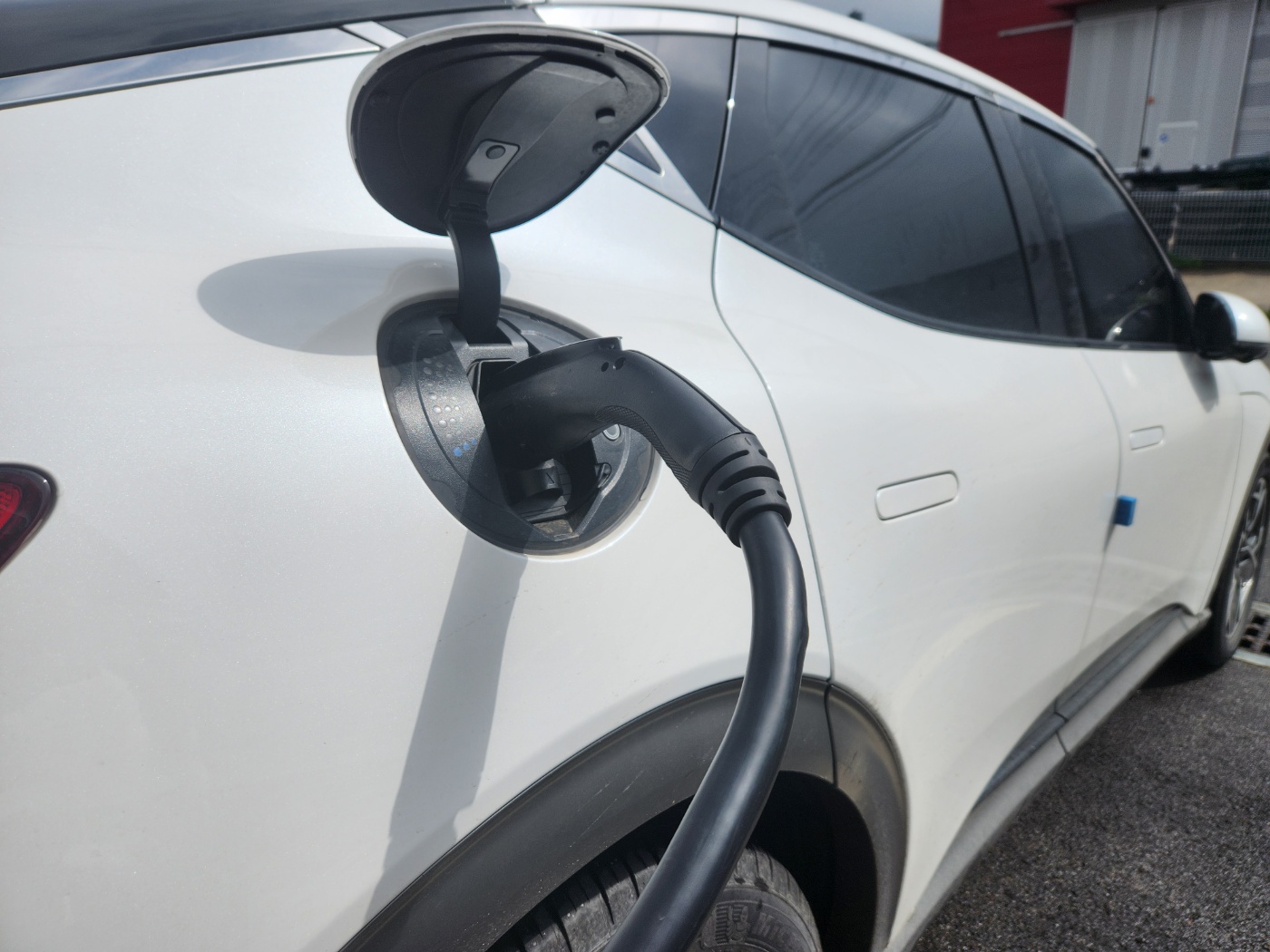
[Electric Vehicle Charging Station (RESOL Headquarters)]